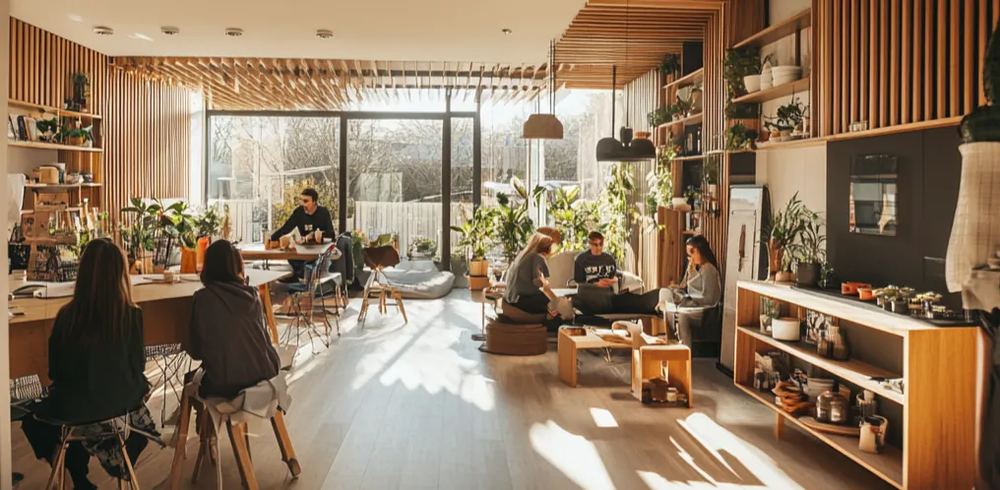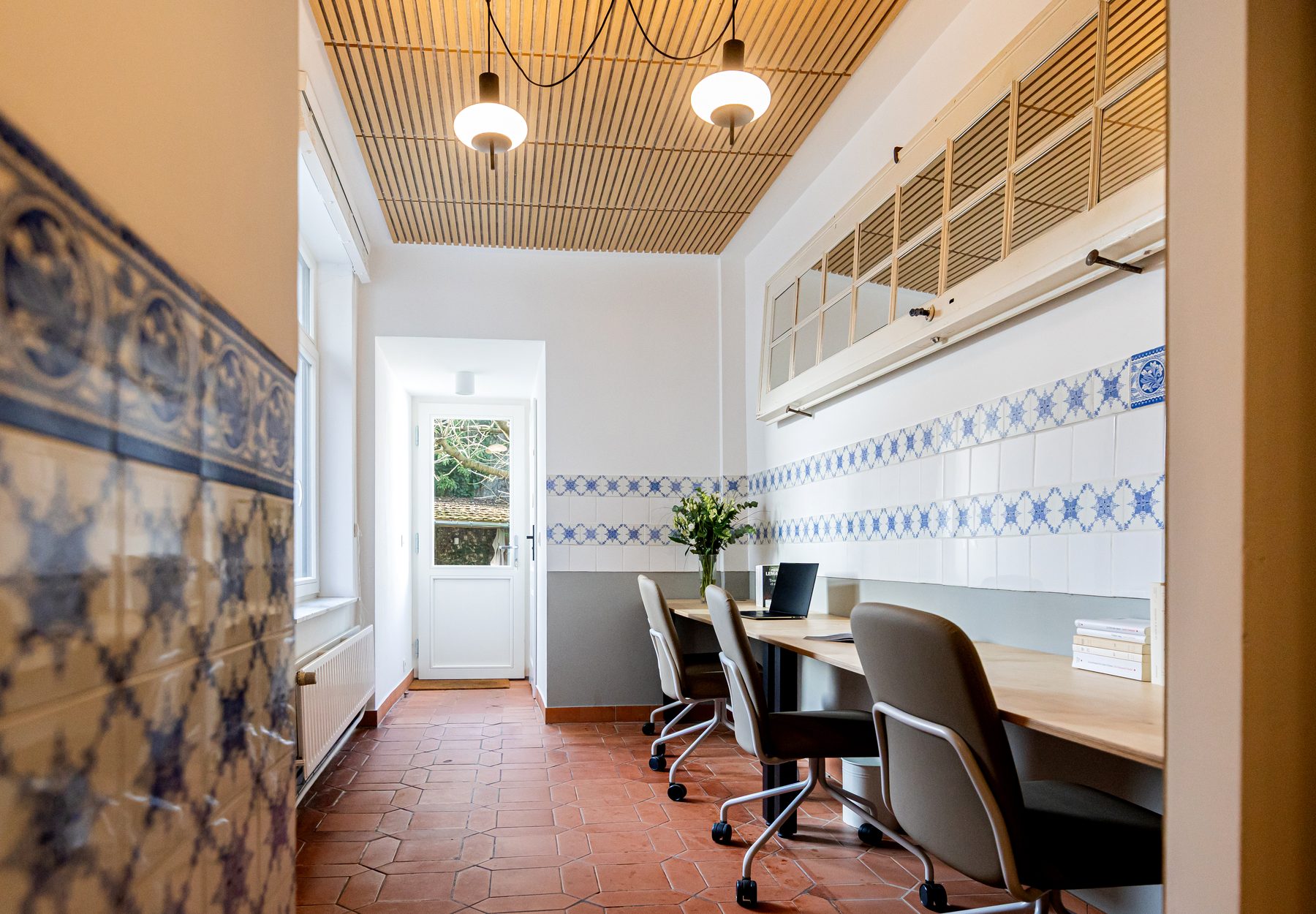
Coliving for expats is a rental model that combines a furnished private room in Brussels with shared spaces, all-inclusive bills and a resident community. It exists because the Belgian rental market is hard to enter from abroad: landlords want proof of local income, a Belgian bank account and a rental deposit before they hand over the keys, and none of that is easy to produce from another country. Coliving removes those barriers. You apply online, sign a digital contract, and walk into a room that is furnished and ready from your first day. That combination is what turns a stressful first rental in Brussels into a soft landing, and it is why so many newcomers use coliving to settle in before they know the city at all.
What Is Coliving for Expats?
Coliving for expats is a housing arrangement where a newcomer rents a furnished private room in a managed shared house in Brussels, with bills, cleaning and community events bundled into one monthly payment. The experience differs from a local tenant's in three ways: an expat has no established network, no working knowledge of the rental market, and often no command of French or Dutch to navigate contracts and utility providers. Coliving compensates for all three by handling the paperwork, the furniture and the introductions on your behalf. If you want the model itself explained from the ground up, start with the meaning of coliving.
Why Do Expats Choose Coliving When Moving to Brussels?
Expats choose coliving because it removes the entry barriers of the Belgian rental market, bundles every bill into one payment, and provides a community from day one. Those three reasons follow a fixed order that the next three sections expand in turn: no local requirements first, all-inclusive rent second, and community third. Each one answers a specific fear that comes with moving abroad — being locked out of the market, drowning in setup admin, and arriving to an empty room in a city where you know no one.
No Belgian Bank Account or Rental History Required
A classic Brussels lease usually asks for proof you cannot yet provide as a newcomer. Landlords and agencies typically request recent payslips, proof of income, sometimes a Belgian bank account, and a rental deposit (garantie locative) of two to three months' rent placed on a blocked account, though the exact deposit depends on the type of lease. Coliving replaces that checklist with an online application, an identity document, and a first payment you can make from a foreign SEPA account. You can move in without a Belgian bank account or a local rental history, which is why coliving is the realistic first home for most expats. The contract side is set out in full in this guide to coliving contracts in Belgium.
All-Inclusive Rent Without Utility Setup
Coliving rent bundles every recurring home cost into a single monthly figure, covering the items listed below.
- Electricity and gas — heating and power with no meter in your name.
- Water — included with no separate account.
- Internet — high-speed Wi-Fi across the house.
- Cleaning — regular cleaning of shared kitchens, bathrooms and living areas.
- Amenities — access to on-site gym and coworking space.
A classic rental hands you the opposite: separate contracts with an energy supplier connected to the Sibelga grid, utility deposits, activation delays, and a cancellation process when you leave. Coliving carries none of that. One payment from around €850 per month all-inclusive covers everything above, so your first weeks go into finding your feet rather than chasing providers.
A Ready-Made Community From Day One
A coliving house gives you a community from day one, built around shared dinners, game nights and a social calendar. Residents are mostly other expats, young professionals and people working at the EU institutions, so the person in the next room is often in the same situation you are. That matters more than it sounds: the "Expat Insider" survey run by InterNations, based on tens of thousands of respondents each year, repeatedly finds that making local friends is one of the hardest parts of relocation. Shared meals and community events give you that network without having to build it from scratch.
What Are the Hidden Costs of a First Rental in Brussels?
A first classic rental in Brussels carries several costs a coliving room does not, compared in the table below.
| Cost item | Classic lease | Coliving |
|---|---|---|
| Rental deposit (garantie locative) | 2–3 months' rent, blocked | Around 1 month, simpler |
| Furniture | €1,500–4,000 one-off | Included |
| Utility deposits & setup | Deposits + activation fees | Included |
| Agency / administrative costs | Often part of a month's rent | None |
| Insurance (assurance habitation) | Required, paid separately | Usually included |
| Double rent during overlap | Common when moving in early | Avoidable |
The largest hidden cost is the combination of the deposit and furniture, which together can demand €3,000–6,000 before you have paid a single month of rent. Splitting these into one-off costs (deposit, furniture, setup) and recurring costs (insurance, double rent) shows why the classic route punishes anyone who cannot commit long-term. These figures track the wider cost of living in Brussels, and the exact amounts vary by lease type, so treat them as planning ranges rather than fixed prices.
How Much Does Coliving for Expats Cost in Brussels?
Coliving for expats in Brussels costs between €700 and €1,200 per month, with Comoon rooms starting from around €820 all-inclusive in 2026. That single figure already contains bills, cleaning, internet and amenities, which is the number that matters when you compare options. A furnished studio at €1,000 per month looks similar on the listing, but €150 in utilities, a furnishing budget and a larger deposit push its real monthly cost past €1,250. The market range can move with location and room type, while the Comoon rate is fixed and all-inclusive. For the full breakdown, see coliving prices in Brussels, or view what fits your budget among the current coliving room in Brussels listings.
How to Move Into a Brussels Coliving From Abroad
Moving into a Brussels coliving from abroad takes five steps, done before you board the plane.
- Choose a neighbourhood and a house that fit your budget and commute.
- Apply online with a scan of your ID.
- Take a video tour of the room and shared spaces.
- Sign the contract digitally.
- Move in with a single suitcase to a room that is already furnished.
You can book remotely, weeks before you arrive, because the whole flow runs on an online application and a digital contract. That means your housing is settled before you land, and your energy on arrival goes into registration and setup rather than a frantic room search. The step-by-step is expanded in how to rent a coliving room in Brussels.
Which Brussels Neighborhoods Are Best for Expat Coliving?
Five neighbourhoods stand out for expat coliving in Brussels, each with its own profile and commute.
- European Quarter — the most international neighbourhood, walking distance from the EU institutions and the fastest choice for institution staff.
- Etterbeek — residential and green, two metro stops from Schuman on lines 1 and 5, popular with young professionals.
- Ixelles — lively and multilingual, with cafés and nightlife, 10–15 minutes to the centre.
- Saint-Gilles — creative and affordable, well connected by tram to the south of the city.
- Schaerbeek — spacious and characterful, 8–12 minutes to the European Quarter by metro.
Comoon runs houses in and around the European Quarter near Schuman and near Montgomery in Etterbeek, which keeps most residents within a 15-minute commute of the institutions. For a wider ranking, see the best neighborhoods in Brussels, read the guide to living in the European Quarter, or look at a coliving house near Montgomery.
What Should Expats Do After Moving In?
After moving into a Brussels coliving, expats should complete four administrative steps in their first weeks, listed below.
- Register your address at the commune.
- Open a Belgian bank account.
- Join a mutuelle (ziekenfonds) for health insurance.
- Get a Belgian SIM card.
Each of these turns a foreign arrival into a resident, and each depends loosely on the one before it, so order matters. The full sequence, with the documents each step needs, is laid out in this moving to Brussels checklist.
How Does Commune Registration Work in a Coliving?
Expats staying longer than three months are generally required to register their address at the commune, and a police visit usually confirms that you actually live there. You book an appointment, submit your documents, and wait for a neighbourhood officer to check the address before you are entered in the register. Because Brussels has 19 communes, the appointment system, the waiting time and the exact document list vary from one to the next, so confirm the procedure with your own commune (gemeente). The domiciliation process for shared houses specifically is covered in commune registration in Brussels.
Do Expats Need a Belgian Bank Account to Rent a Coliving Room?
No — expats can usually pay coliving rent from a foreign SEPA account. A single euro-area transfer covers the first month and the deposit, so you can secure the room before you open anything local, provided the operator accepts SEPA payments. A classic lease is stricter: some landlords and the blocked-account rules for a garantie locative may require a Belgian account, though this depends on the deposit type. Confirm the payment method with your operator, and open a local account once you have registered.
Can You Book a Coliving Room Before Arriving in Brussels?
Yes — you can book a coliving room before arriving in Brussels. The application, the video tour and the digital contract all happen online, so nothing in the process needs you to be in the country. Typical lead time from application to signed contract runs one to three weeks, which means a room requested a month before your flight is comfortably yours on arrival. Browse the current available rooms to see what you can reserve now.
Is Coliving Cheaper Than a Studio for Expats?
Coliving is usually cheaper than a studio for expats once bills, furniture and the deposit are included. A €1,000 studio becomes roughly €1,250 per month after €150 in utilities and a furnishing cost spread across the stay, before you count a two-month blocked deposit. A coliving room at around €820 all-inclusive carries no separate bills and a lighter deposit, so the real monthly figure sits lower and the upfront outlay is smaller. The detailed comparison is in coliving vs studio in Brussels.