The European Quarter, known in French as the Quartier Européen and often called the EU Quarter, is the district built around the Schuman roundabout that hosts the main institutions of the European Union. Living in Brussels here means working within walking distance of the European Commission, crossing two large parks on your way home and eating lunch beside diplomats and trainees. This neighborhood guide sets out, for 2026, what the Quarter contains: the institutions, the green spaces, the food, the transport, the safety picture and what it costs to rent. It also points to the quieter neighboring districts just past its edges, so you can judge whether the centre of European power is where you actually want to sleep.

What Is the European Quarter in Brussels?
The European Quarter of Brussels is the office-and-residential district around the Schuman roundabout and Rue de la Loi that houses the main EU institutions and stretches across three communes: the City of Brussels, Etterbeek and Ixelles. Roughly 50,000 people work here in the institutions, agencies, lobbies, law firms and press bureaus that cluster around the Schuman roundabout. The area reads as an international office district with residential pockets: glass institutional towers on the western side, nineteenth-century townhouses on the eastern and northern edges.
Where Is the European Quarter Located?
The European Quarter sits east of Brussels city centre, along the Rue de la Loi / Wetstraat axis that runs uphill from the Royal Park toward the Schuman roundabout. The European Quarter is bounded by the following landmarks:
- Rue de la Loi / Wetstraat — the central axis lined with institutional buildings, running east–west.
- Schuman roundabout — the symbolic centre, where the Commission and Council face each other.
- Parc du Cinquantenaire — the eastern edge, on the Etterbeek side.
- Parc Léopold and the European Parliament — the southern edge, toward Ixelles.
- Square Ambiorix and the Squares district — the northern edge, toward the City of Brussels.
These borders cut across three communes — Brussels-City, Etterbeek and Ixelles — which is why the Quarter has no single town hall of its own.
Which EU Institutions Are Based in the European Quarter?
Five institutional clusters give the European Quarter its name and its daytime population. The main EU institutions in Brussels and their addresses are listed in the table below.
| Institution | Building | Nearest metro |
|---|---|---|
| European Commission | Berlaymont | Schuman |
| Council of the EU / European Council | Justus Lipsius / Europa | Schuman |
| European Parliament | Espace Léopold (Station Europe) | Maelbeek / Luxembourg (rail) |
| European External Action Service (EEAS) | Schuman roundabout | Schuman |
| Committee of the Regions + EESC | Jacques Delors building | Maelbeek |
The Berlaymont building, with its cross-shaped glass wings, is the one most people picture when they think of the EU, and it stands directly on the Schuman roundabout.
What Are the Green Spaces in the European Quarter?
The European Quarter holds three green spaces that soften its office density and give residents room to run, picnic and slow down.
- Parc Léopold wraps a small lake below the European Parliament and holds the House of European History and the Solvay Library across its 10 hectares.
- Parc du Cinquantenaire spreads across roughly 30 hectares behind its triumphal Arcade and gathers three museums — the Art & History Museum, Autoworld and the Royal Military Museum — plus the district's main jogging loops.
- Square Marie-Louise and the Squares district ring ornamental ponds with art nouveau townhouses, forming the Quarter's quietest and most residential corner.
Where Do You Eat and Drink in the European Quarter?
Place Jourdan is the gastronomic heart of the European Quarter, home to Maison Antoine, the friterie serving fries since 1948, and to a Sunday market that draws the whole neighborhood. A short walk south, Place du Luxembourg — "Plux" to everyone who works nearby — fills with EU staff for Thursday after-work drinks in front of the Parliament. The everyday cafés cluster on Rue Archimède and Rue Franklin, where consultants take morning coffee before the institutions open. The main food and drink spots are listed below.
- Place Jourdan — Maison Antoine friterie, brasseries and a Sunday market.
- Place du Luxembourg ("Plux") — Thursday after-work drinks in front of the European Parliament.
- Rue Archimède — specialty coffee and quick breakfast spots.
- Rue Franklin — bakeries and lunch counters near Schuman.
- Rue de Toulouse — small restaurants favoured by trainees, with lunch around €12–15.
Both Plux and Jourdan sit a short metro ride or walk from Schuman station, so no meal in the Quarter is more than ten minutes from the institutions.
How Do You Get Around from the European Quarter?
The European Quarter is one of the most connected districts in Brussels, combining metro, rail and bus at a single hub. Metro lines 1 and 5 serve Schuman and neighbouring Maelbeek. Schuman railway station runs SNCB trains through the Schuman–Josaphat tunnel, including a direct service to Brussels Airport in about 16 minutes and a line toward Luxembourg. STIB bus 12 links the Quarter to the airport as an express service, and Villo! shared bikes cover the last mile. Typical journey times from the Quarter are shown below.
| Destination | Time |
|---|---|
| Grand Place | ~8 min (metro) |
| Gare Centrale | ~6 min (metro) |
| Brussels Airport | ~16 min (train) |
| Gare du Midi | ~15 min (metro) |
| Flagey | ~15 min (bus/tram) |
How Safe Is the European Quarter?
The European Quarter is among the safer office districts in Brussels during the day, with a heavy institutional presence and steady foot traffic on Rue de la Loi. In the evenings and at weekends the office blocks empty out, so the streets around Rue de la Loi feel deserted rather than dangerous. Pickpocketing can occur around Schuman station during rush hour, as at any busy transport hub, so standard urban attention applies. The residential streets on the Etterbeek side and around the Squares district stay calm and quiet after dark, which is why most people who actually live here choose those edges over the institutional core.
How Much Does Rent Cost in the European Quarter?
Renting in the European Quarter costs more than the Brussels average, because demand from EU staff and short-term contractors keeps listings scarce. A one-bedroom apartment rents for €950–1,300 a month in 2026, while an all-inclusive coliving room starts around €820. The four main housing types and their 2026 costs are set out below.
| Housing type | Monthly rent (2026) | Bills included? |
|---|---|---|
| Furnished studio | €900–1,200 | No |
| One-bedroom apartment | €950–1,300 | No |
| Coliving room (all-inclusive) | from ~€850 | Yes |
| Room in colocation | €600–950 | Varies |
Listings around the Quarter disappear fast — good rooms are often gone within 10 to 20 days — so it pays to understand the full picture of coliving prices in Brussels before you start searching.
Who Should Live in the European Quarter?
The European Quarter suits people whose working day is anchored to the institutions and who value a commute measured in minutes. The four groups it fits best are listed below.
- EU officials and contractual agents — walk to work at the Commission, Council or Parliament.
- Blue Book trainees and interns — short five-month contracts need flexible, furnished housing near Schuman.
- Consultants, lobbyists and accredited journalists — cluster near the institutions they cover.
- Young professionals — value a short commute over a lower rent.
Blue Book trainees in particular need housing that matches the length of their traineeship, which is why dedicated housing for EU trainees in Brussels has become its own category near Schuman.
What Housing Options Exist in the European Quarter?
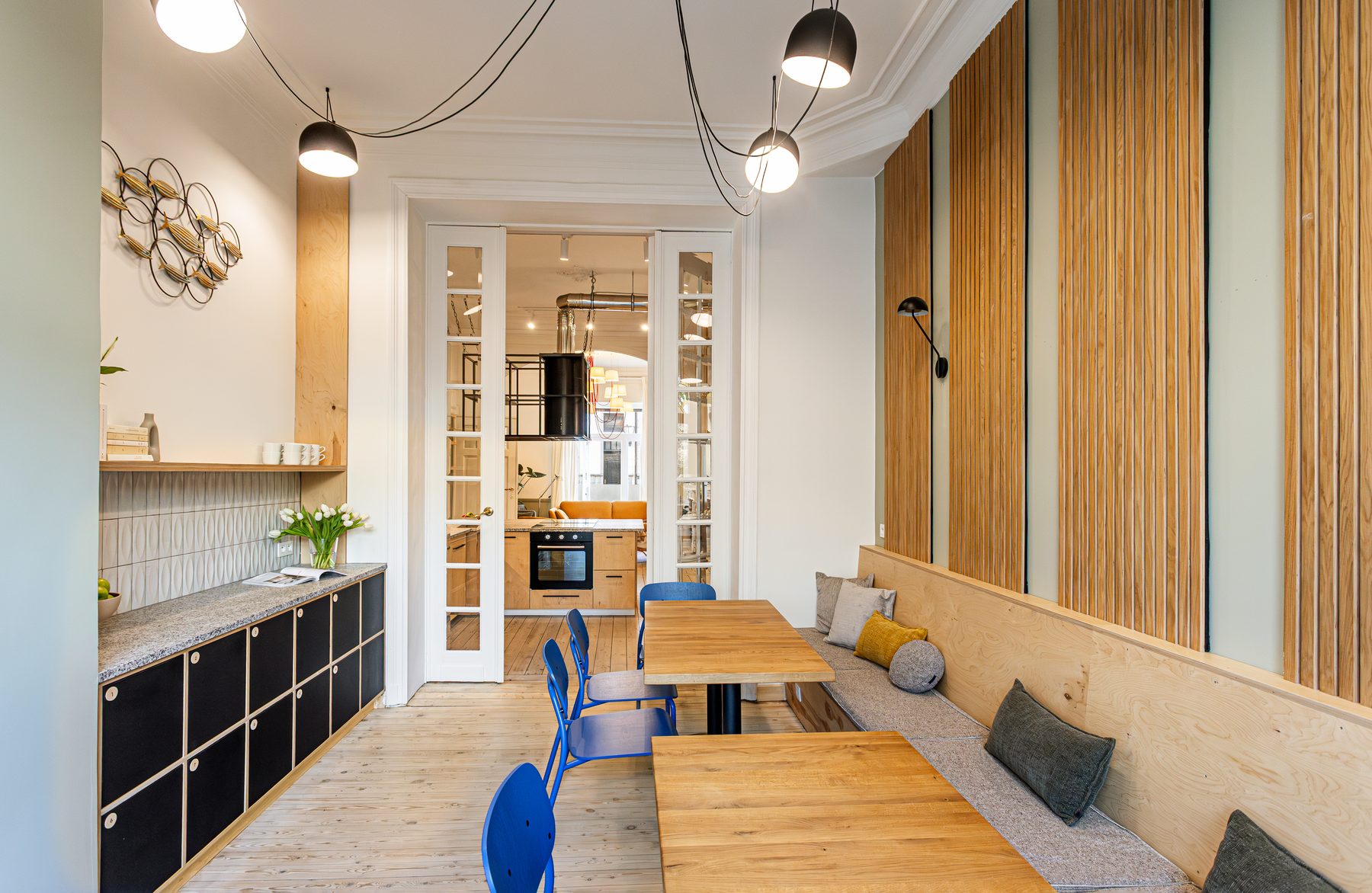
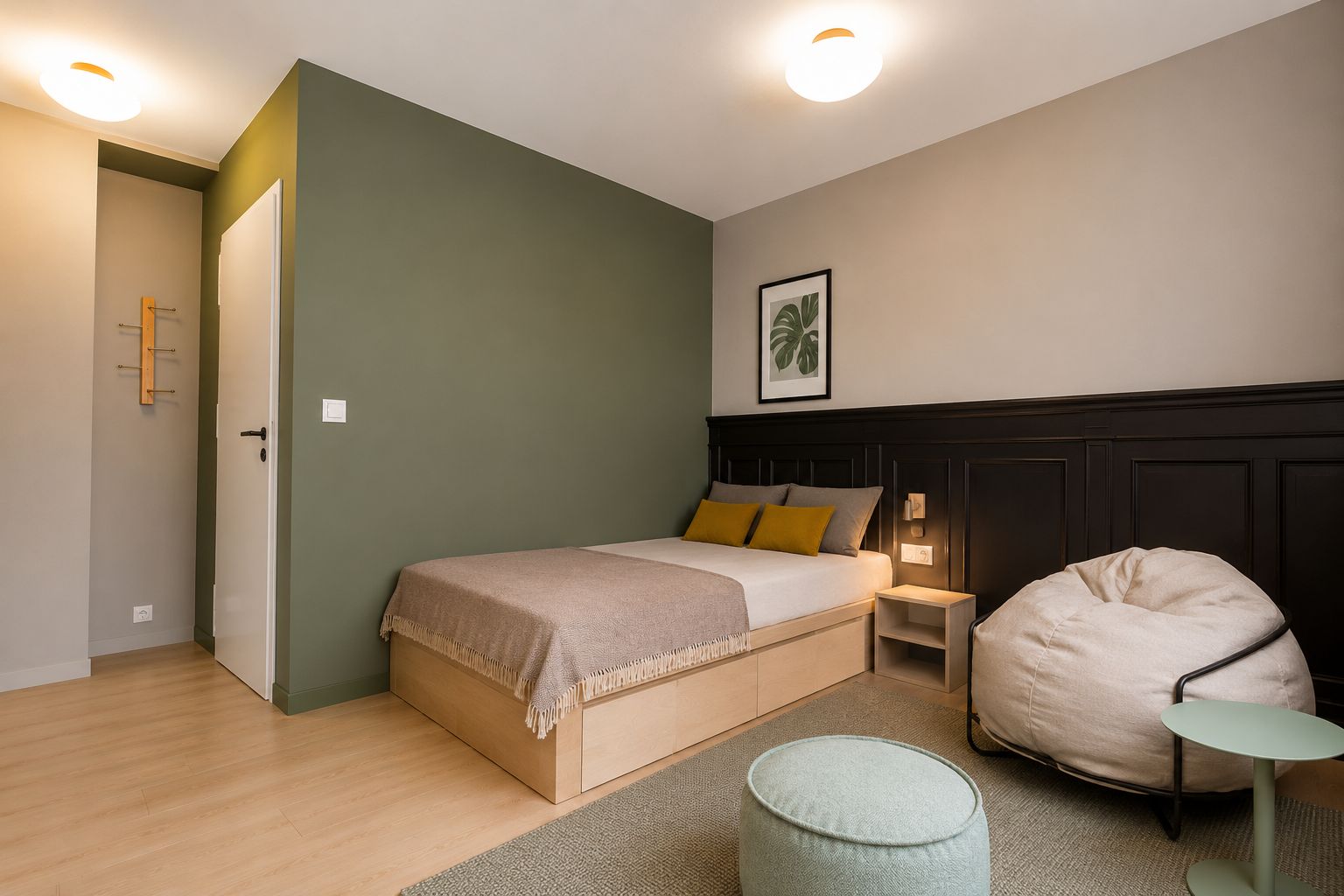
Three housing options dominate the European Quarter: coliving, furnished apartments and studios. Coliving leads for newcomers, because furnished private rooms, all-inclusive billing and flexible leases match the rotating contracts of EU work. Comoon runs three coliving houses in and along the edge of the Quarter, each from around €950 a month all-inclusive.
- Schuman 4 sits closest to the roundabout, with private rooms, a garden and terrace, bike storage and community events.
- Schuman 30 adds a cinema room and fast 500 Mbps internet within a short walk of the institutions.
- Schuman 42 offers private rooms with ensuite bathrooms, a coworking space and a 4K cinema room in a period building.
All three bundle utilities, internet, cleaning of common areas and coworking into one payment, so you can browse available coliving rooms and move in without setting up a single contract.
How Do You Choose Between the European Quarter and Its Neighboring Districts?
Choosing between the European Quarter and its neighboring districts comes down to three criteria: commute, budget and evening atmosphere. On commute, the Quarter wins outright if you work in the institutions. On budget, the neighboring communes run cheaper for comparable space. On evening atmosphere, the quieter residential streets of Etterbeek and Ixelles beat the emptied-out office core. Weigh them in this order:
- Map your commute — count the minutes from a candidate street to your building.
- Set your housing budget — decide whether all-inclusive simplicity is worth a small premium.
- Test the evenings — walk the street after 8 p.m. before you sign.
For many residents the answer is to live just outside the Quarter, in the calmer districts described below.
Which Neighborhoods Border the European Quarter?
Three neighborhoods border the European Quarter and absorb most of its residents.
- Etterbeek holds Place Jourdan and the Merode roundabout and stays residential and calm, a two-stop metro ride from Schuman.
- Ixelles brings Place du Luxembourg and Flagey into reach and offers the Quarter's most social streets.
- The Squares district and the Schaerbeek border line their avenues with art nouveau facades and stay the quietest of the three.
If Schuman itself feels too institutional, living near Schuman on its residential side or exploring the best neighborhoods in Brussels for young professionals will show you the softer alternatives within a few minutes' commute.
European Quarter vs Brussels City Center: Which Is Better for EU Professionals?
For anyone working in the institutions, the European Quarter beats the city centre on commute; the centre beats the Quarter on nightlife and evening life. The two compare as follows.
| Criterion | European Quarter | City Center |
|---|---|---|
| Commute to institutions | Walk (0–10 min) | 8–15 min by metro |
| Rent | Above average | Average to high |
| Nightlife | Moderate (Plux, Jourdan) | High (Sainte-Catherine, Saint-Géry) |
| Tourist crowds | Low | High |
If your day starts at the Berlaymont, you should choose the Quarter; if it starts on a laptop and your evenings matter more, the centre may serve you better.
#### Is the European Quarter a Good Place to Live?
Yes — the European Quarter is a good place to live if you work at or near the EU institutions and value a short commute. The trade-offs are quiet weekends, when the office blocks empty out, and a rent that runs above the Brussels average, both of which the neighboring residential streets soften without adding more than a few minutes to your journey.