The Brussels rental market covers a region of 19 communes with a high share of tenants and a private rental sector that dominates supply. There are nine main types of housing in Brussels, and they sort cleanly along three axes: privacy, furnishing and contract length. This guide classifies each type, prices it for 2026, and shows which profile of resident it fits — from students to EU trainees to business travellers — so you can place coliving where it belongs among the alternatives before you choose.
What Are the Main Types of Housing in Brussels?
The nine main types of housing in Brussels are listed below.
- Coliving — furnished private room with shared amenities and all-inclusive rent
- Colocation (flatshare) — several tenants sharing one apartment
- Kot — Belgian student room
- Student residence — managed building of student rooms
- Studio — self-contained single-room apartment
- Unfurnished apartment — classic long lease, your own furniture
- Furnished apartment — furnished, often shorter contracts
- Serviced apartment — furnished with hotel-style services
- Aparthotel — hotel format with a kitchenette
The table below sets the nine types side by side on cost, furnishing, contract and fit.
| Housing type | Typical monthly cost (EUR, 2026) | Furnished | Typical contract | Best for |
|---|---|---|---|---|
| Coliving | €500–€1,200 all-in | Yes | 3–12 months, flexible | Young professionals, EU trainees, nomads |
| Colocation | €700–€950 + charges | Sometimes | 1–3 years | Cost-conscious sharers |
| Kot | €700–€950 | Usually | 10–12 months | Students |
| Student residence | €500–€800 | Yes | Academic year | Students wanting services |
| Studio | €900–€1,200 + charges | Sometimes | 3–9 years | Those wanting full privacy |
| Unfurnished apartment | €900–€1,400 | No | 9 years (default) | Families, long stays |
| Furnished apartment | €950–1,200 | Yes | Shorter terms | Expats, medium stays |
| Serviced apartment | €1,500–€2,500 | Yes | Monthly | Corporate stays |
| Aparthotel | €2,000+ | Yes | Nights to months | Extended business travel |
Actual figures shift with the commune and the condition of the property, but the bands hold across the region as of 2026.
How Are Housing Types in Brussels Classified?
Housing types in Brussels are classified along three axes, described below.
- Privacy level — shared options (coliving, colocation, kot) put you among housemates, while private options (studio, apartments) give you a self-contained home.
- Furnishing and services — the scale runs from unfurnished, through furnished, to all-inclusive and serviced, where cleaning and support come bundled.
- Contract length — the range spans short-term formats (aparthotel, serviced apartment), flexible terms (coliving, kot), and long-term commitments such as the 9-year main residence lease.
These three axes explain almost every price and contract difference in the table above. The lease that governs each type is a legal matter in its own right, which the section on leases picks up later.
What Is Coliving?
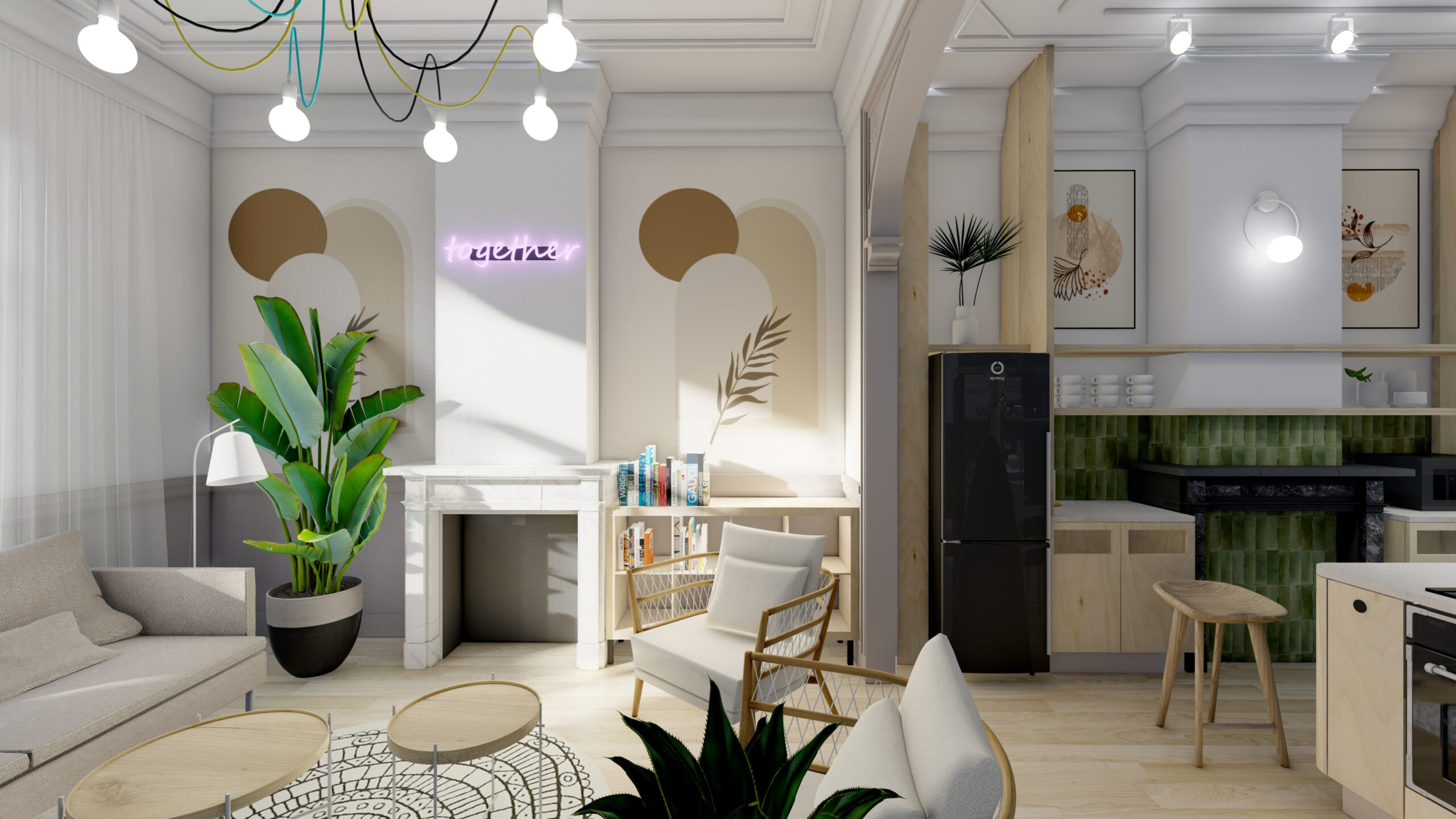
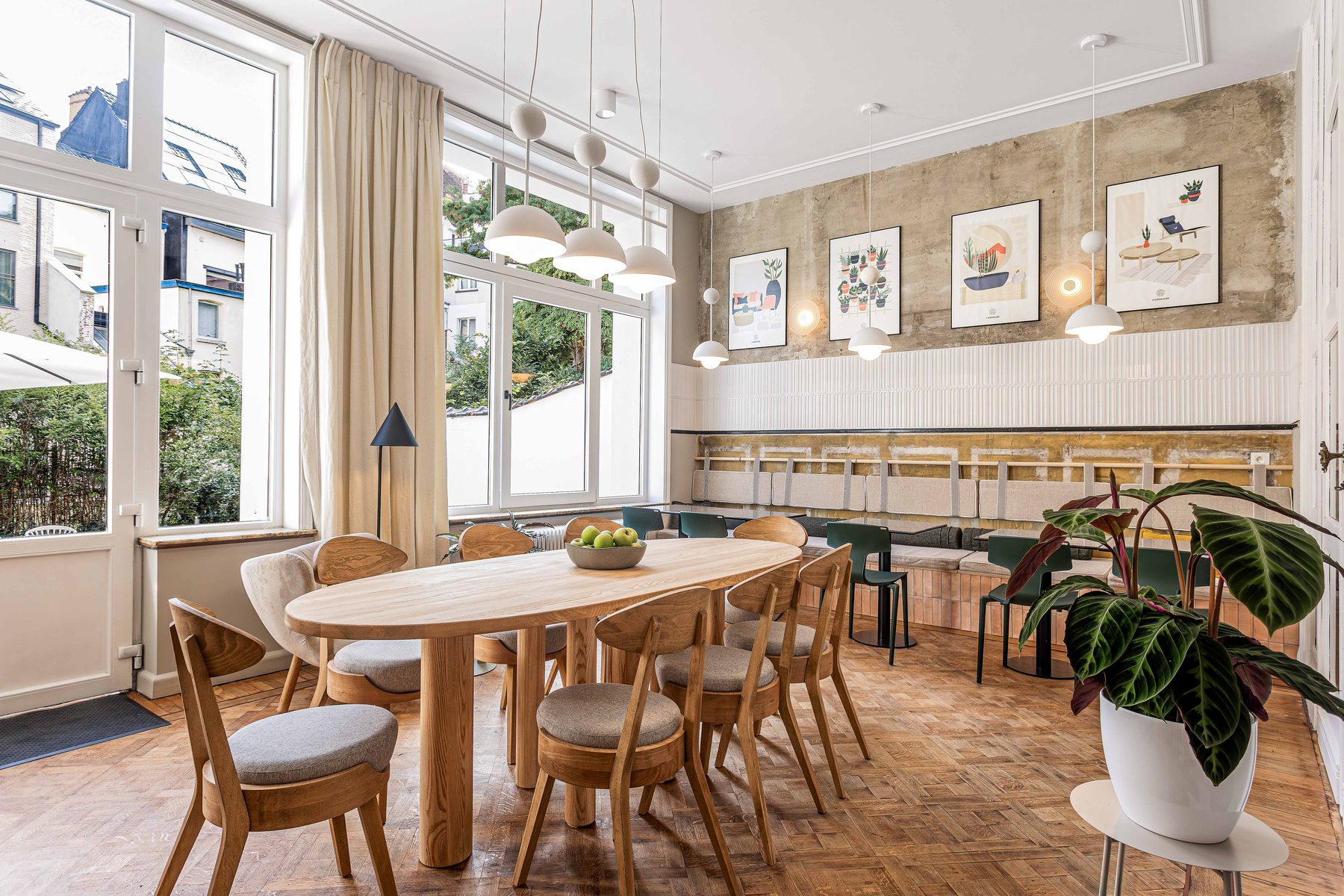
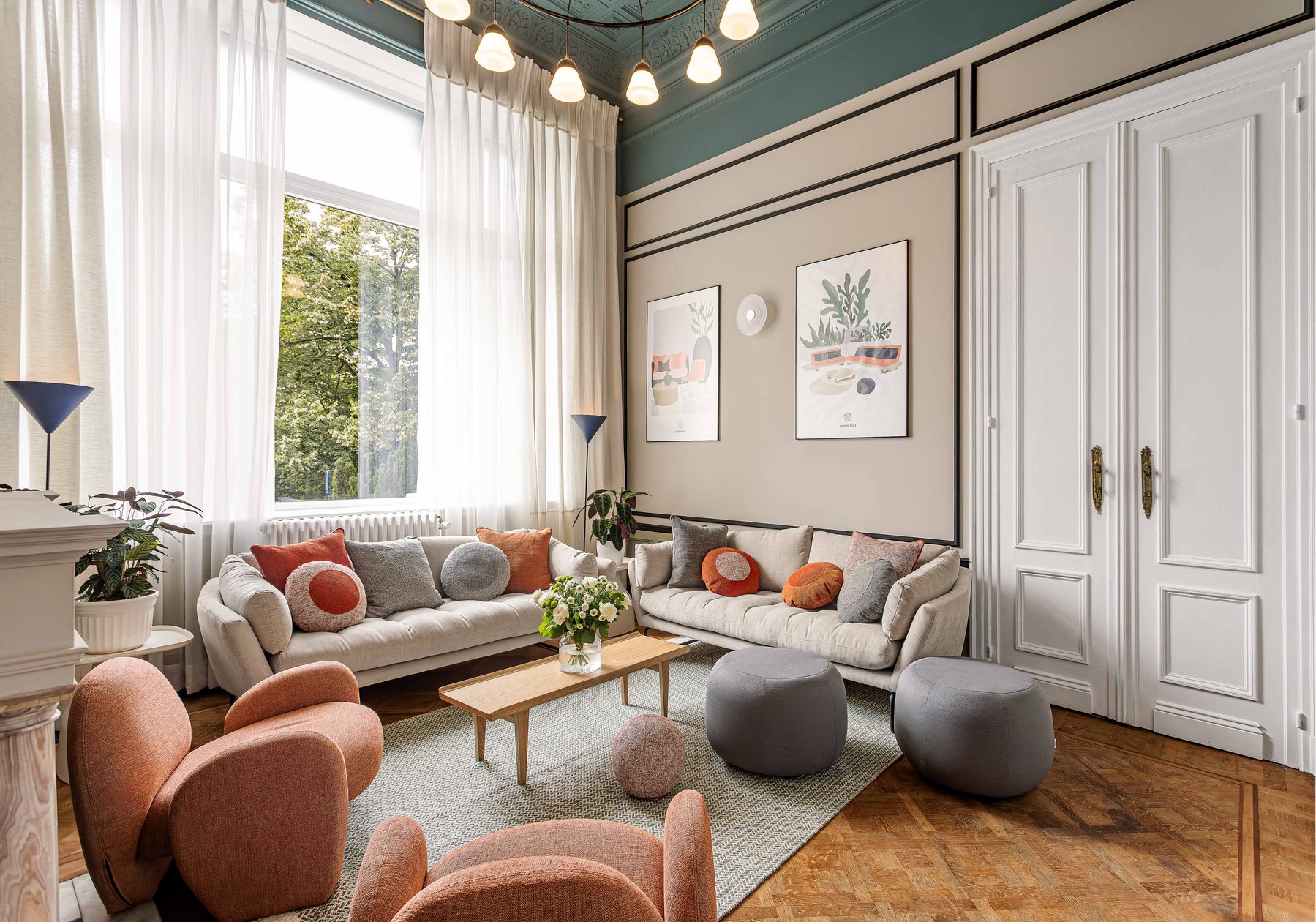
Coliving is a professionally operated housing model that combines a furnished private room, shared amenities, an all-inclusive rent and community services in one package. It differs from colocation in that an operator runs the house, sets one inclusive price, and organises cleaning, maintenance and events, rather than tenants self-managing a flat.
Prices run €500–€1,200 per month all-in in 2026, and stays typically last 3 to 12 months with flexible renewal. The format suits people who want a ready-made home and social life without setting up utilities or buying furniture. The full picture sits in the co-living in Brussels overview.
What Is Colocation (Flatshare)?
Colocation is the shared rental of one apartment by several tenants, held under a single joint lease or individual contracts, with charges settled separately and residents organising daily life themselves. The Brussels-Capital Region also has a dedicated colocation regime, built around a pacte de colocation, which formalises how sharers split costs and replace a departing housemate.
Expect €700–€950 per room, plus charges of €100–€150. The trade-off against coliving is self-management: cheaper on paper, more effort in practice. The coliving vs colocation in Brussels comparison sets out the differences in detail. Legally colocation and coliving are based on same type of contracts, it’s more about who is organising the contract.
What Is a Kot?
A *kot* is a Belgian student room — the term comes from Dutch — rented in a private house, a dedicated student building ("community kot"), or as a self-contained kot-studio. It is the most common form of student accommodation in Brussels. Rents run €700–€950 per month, on contracts of 10 to 12 months that track the academic year around universities such as the ULB, VUB and KU Leuven Brussels.
The kot is the cheapest way to live in the city if you qualify as a student. For the student-focused comparison, see kot vs coliving for students.
What Is a Student Residence?
A student residence is a private or university-managed building of student rooms with shared services, distinct from a kot in its scale, its institutional management and its bundled amenities. Where a kot is often a room in someone's house, a residence is a purpose-run building with reception, study rooms and cleaning.
Rents typically run €500–€800 per month, positioning residences a step above kots for students who want services rather than the lowest possible price.
What Is a Studio in Brussels?
A studio is a self-contained one-room apartment with its own kitchenette and bathroom, giving full privacy and full responsibility for utilities and furnishing. You sign for the space alone and set up everything yourself. Rent runs €900–€1,200, with charges of €150–€250 on top for utilities.
The privacy is complete; so is the admin. If you want the private space but not the setup, the coliving vs renting a studio in Brussels comparison weighs the total cost of each.
What Is the Difference Between Furnished and Unfurnished Apartments?
An unfurnished apartment is the classic Brussels rental: let empty, taken on the default 9-year lease, and furnished with your own belongings. A furnished apartment comes ready to live in and carries a premium of roughly 10–20% over the equivalent unfurnished unit, often on shorter contracts.
The price difference reflects the landlord financing the furniture and accepting shorter tenancies. Unfurnished suits long, settled stays; furnished suits expats and medium-length stays where buying furniture makes no sense.
What Is a Serviced Apartment?
A serviced apartment is a furnished apartment bundled with hotel-style services — cleaning, reception, linen — billed monthly and aimed at corporate tenants. Prices run €1,500–€2,500 per month. It differs from coliving in one key way: it delivers private, self-contained space and services without a resident community.
For a stay where you want privacy and services but not shared living, the coliving vs serviced apartments comparison lays out the choice.
What Is an Aparthotel?
An aparthotel is a hotel-format property with self-contained units that include a kitchenette, bookable by the night or the month, and the most expensive long-stay option at €2,000+ per month. It sits at the top of the serviced spectrum, trading cost for maximum flexibility and full hotel infrastructure. For extended business travel where budget is secondary to convenience, it fills a clear niche.
Which Type of Housing Is Cheapest in Brussels?
A kot is the cheapest housing type in Brussels at €700–€950 per month, if you qualify as a student. Ranked from cheapest upward, the order runs:
- Kot — €700–€950
- Colocation — €700–€950 plus charges
- Coliving — €500–€1,200 all-in
- Studio — €900–€1,200 plus charges
- Serviced apartment — €1,500–€2,500
Among the all-inclusive options, coliving is the most affordable, since its single rent already carries the utilities and services that a studio bills separately. For non-students, coliving and colocation compete for the lowest realistic monthly outlay.
Which Housing Type Should You Choose in Brussels?
The right housing type in Brussels depends on your profile, mapped below.
- Students should look at a kot or student residence for the lowest cost and academic-year contracts.
- EU trainees and young professionals should consider coliving for its flexible contracts and ready-made community near the institutions.
- Expat couples should weigh a studio or furnished apartment for private space on a medium term.
- Families should choose an unfurnished apartment on a standard lease for stability and room to grow.
- Business travellers should book a serviced apartment or aparthotel for services without a commitment.
If your profile points to coliving, you can browse furnished coliving rooms to see what fits your budget and neighborhood. Each type carries its own lease, which the next section addresses.
How Do You Rent Housing in Brussels?
Renting housing in Brussels follows five steps regardless of type: search, viewing, application, contract and move-in. What changes between types is the paperwork and the lease you sign — a kot uses a student lease, an apartment defaults to a 9-year main residence lease, and a coliving room usually runs on a flexible short-term contract. The process itself stays the same shape.
For the coliving version step by step, see how to rent a coliving room in Brussels.
Which Lease Applies to Each Housing Type?
Under Belgian law, each housing type in the Brussels-Capital Region carries a matching lease, summarised below.
| Lease type | Applies to | Typical duration |
|---|---|---|
| Main residence lease (bail de résidence principale) | Apartments, studios | 9 years by default |
| Short-term lease | Coliving, furnished rentals | Up to 3 years |
| Student lease | Kot | 12 months |
| Common law lease | Serviced apartments, aparthotels | Freely agreed |
Which lease you sign determines your notice period, your deposit cap and whether you can register the address as your main residence. The coliving contracts in Belgium guide covers the coliving cases in full.
Is Coliving Considered Colocation under Brussels Law?
Yes, coliving can fall under the Brussels colocation rules if several tenants share one lease, but most coliving operators sign individual room contracts, which keeps each tenant independent. With an individual contract, you answer only for your own room and rent, and the pacte de colocation that governs true flatshares does not apply.
Are Furnished Apartments More Expensive than Unfurnished in Brussels?
Yes, furnished apartments in Brussels typically cost 10–20% more than unfurnished ones, because the landlord finances the furniture and usually accepts shorter contracts. The premium buys convenience — you skip the outlay and effort of furnishing an empty flat — which is why it appeals most on medium-length stays.