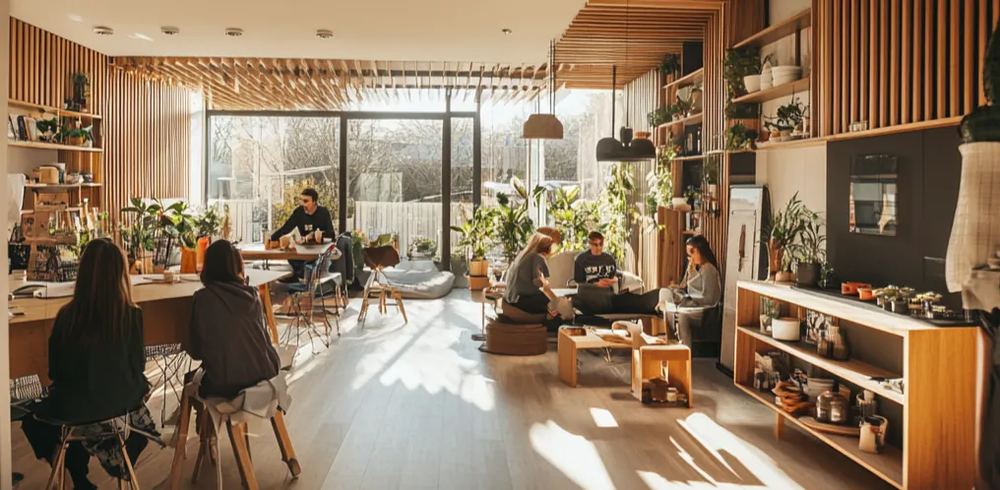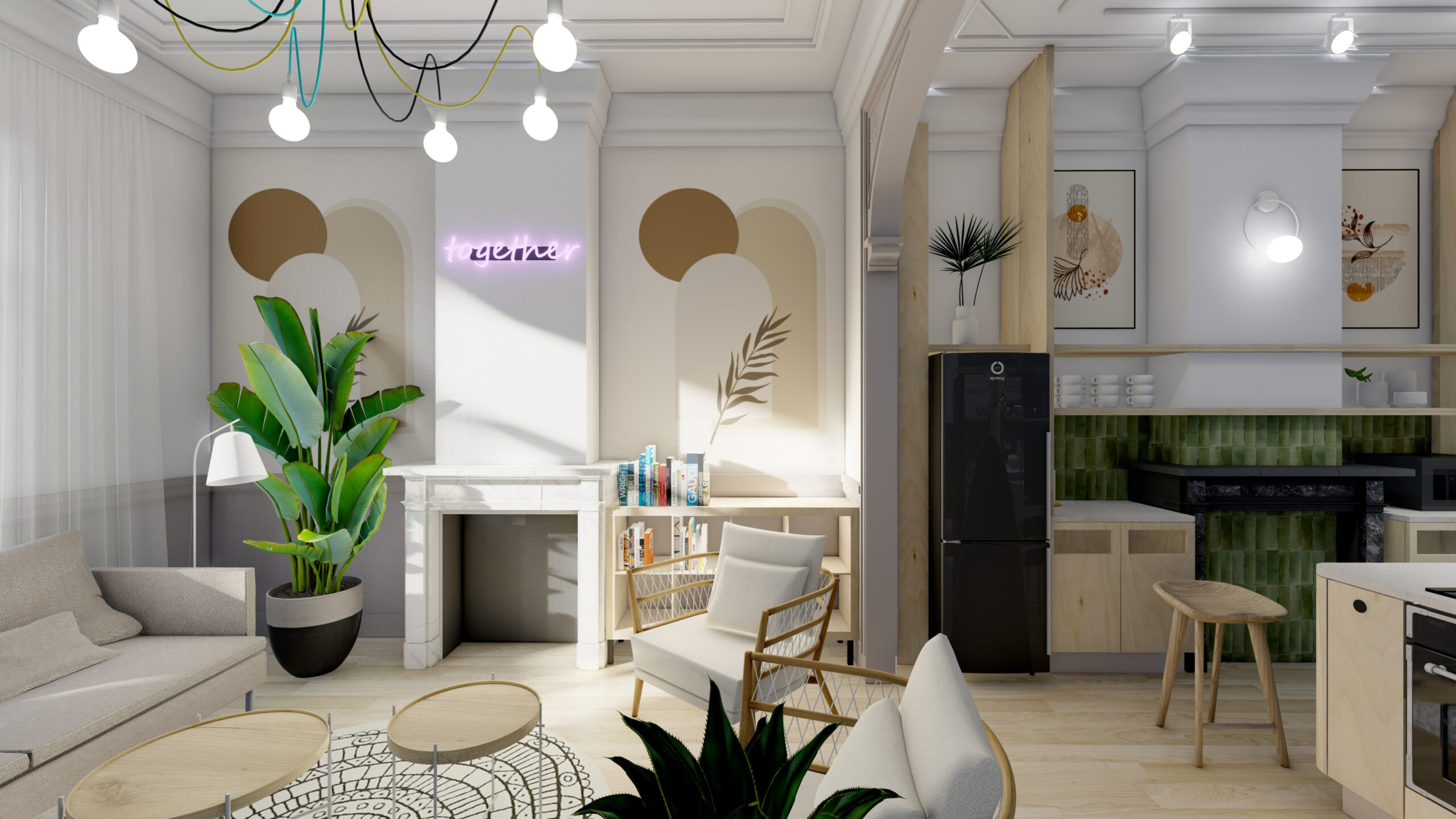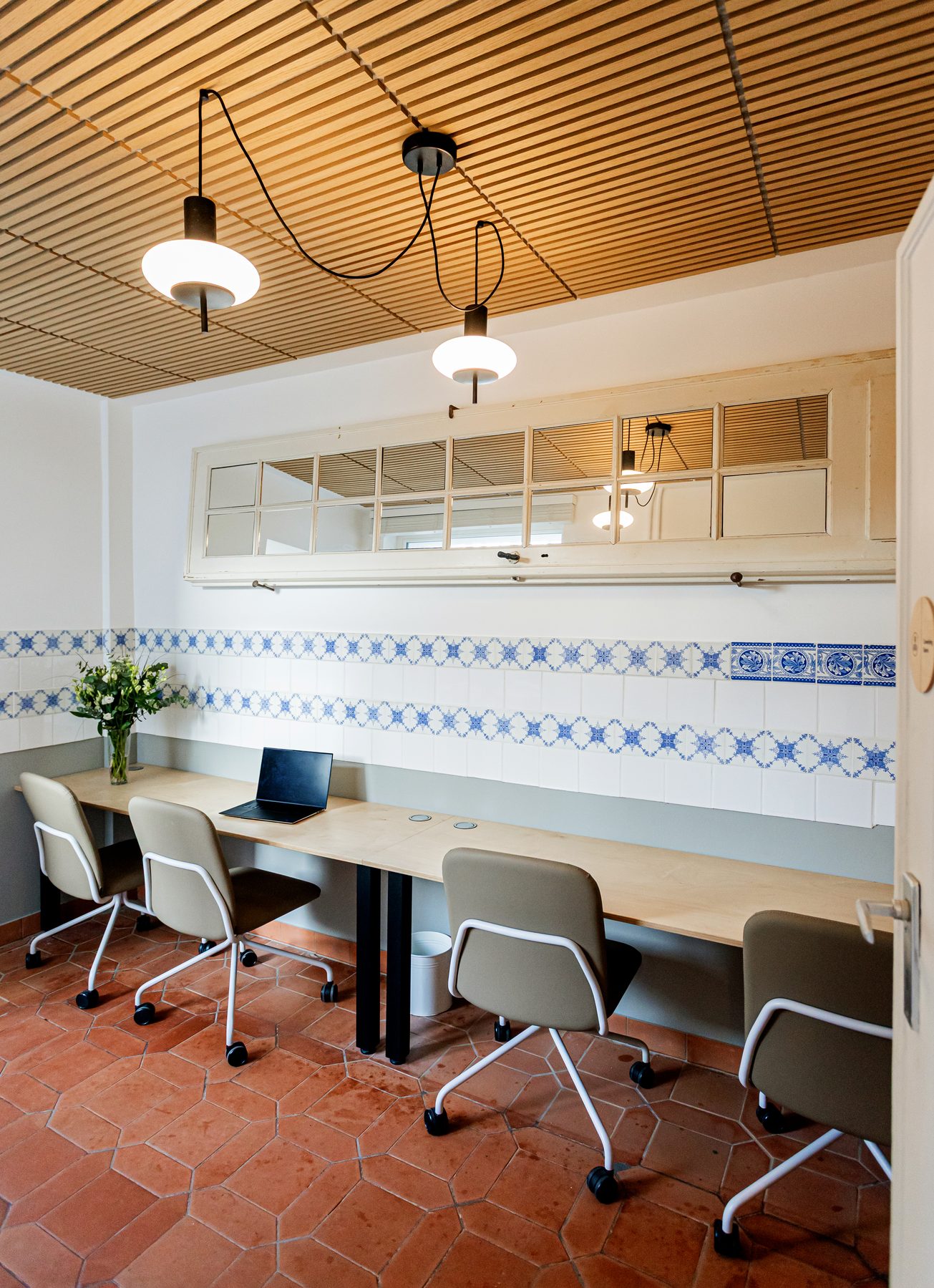
Coliving comes in several models that differ by location, length of stay and the group of residents they serve. The urban version — furnished rooms with community in a city centre, as in Brussels — is only the most visible one. This guide walks through the seven types in turn, from city homes and corporate housing to rural retreats and hotel-style hybrids.
What Are the Main Types of Coliving Spaces?
The seven main types of coliving spaces are urban, corporate, rural, pop-up, student, senior and hybrid coliving. Each packages the same furnished-room-plus-community formula for a different resident and stay length.
The seven main types of coliving spaces are compared in the table below.
| Type | Typical location | Typical stay | Target resident | Price range (EUR/month) |
|---|---|---|---|---|
| Urban | City centre | 3–12 months | Young professionals | €600–€1,100 |
| Corporate | Business districts | 1–6 months | Relocated employees | €900–€1,800 |
| Rural | Countryside, nature | 1–6 months | Digital nomads | €500–€900 |
| Pop-up | Themed destinations | 10–20 days | Nomads, creatives | €800–€1,500 |
| Student | University cities | 6–12 months | Students | €450–€800 |
| Senior | Suburban, mixed | Long-term | Older adults | €700–€1,400 |
| Hybrid | City centre, hotels | Days to months | Remote workers | €700–€1,600 |
The models overlap at the edges, but location, stay length and price separate them clearly enough to choose between.
How Are Coliving Spaces Classified?
Coliving spaces are classified along three dimensions: location, duration and target group. Reading a space across all three tells you more than any single label.
By location, coliving splits into urban and rural models — city-centre homes built around work and nightlife versus countryside houses built around nature and focus.
By duration, coliving ranges from long-stay homes of several months to short-stay corporate housing and pop-up retreats measured in days.
By target group, coliving adapts to professionals, students, seniors and relocating teams, each of which needs different services, contracts and community programming.
These three axes classify coliving more precisely than a flat list of property concepts, because they describe how a space is used rather than only how it is built. Each model still rests on the same core idea set out in the meaning of coliving, which defines the shared-room-with-services formula the types all vary.
What Is Urban Coliving?
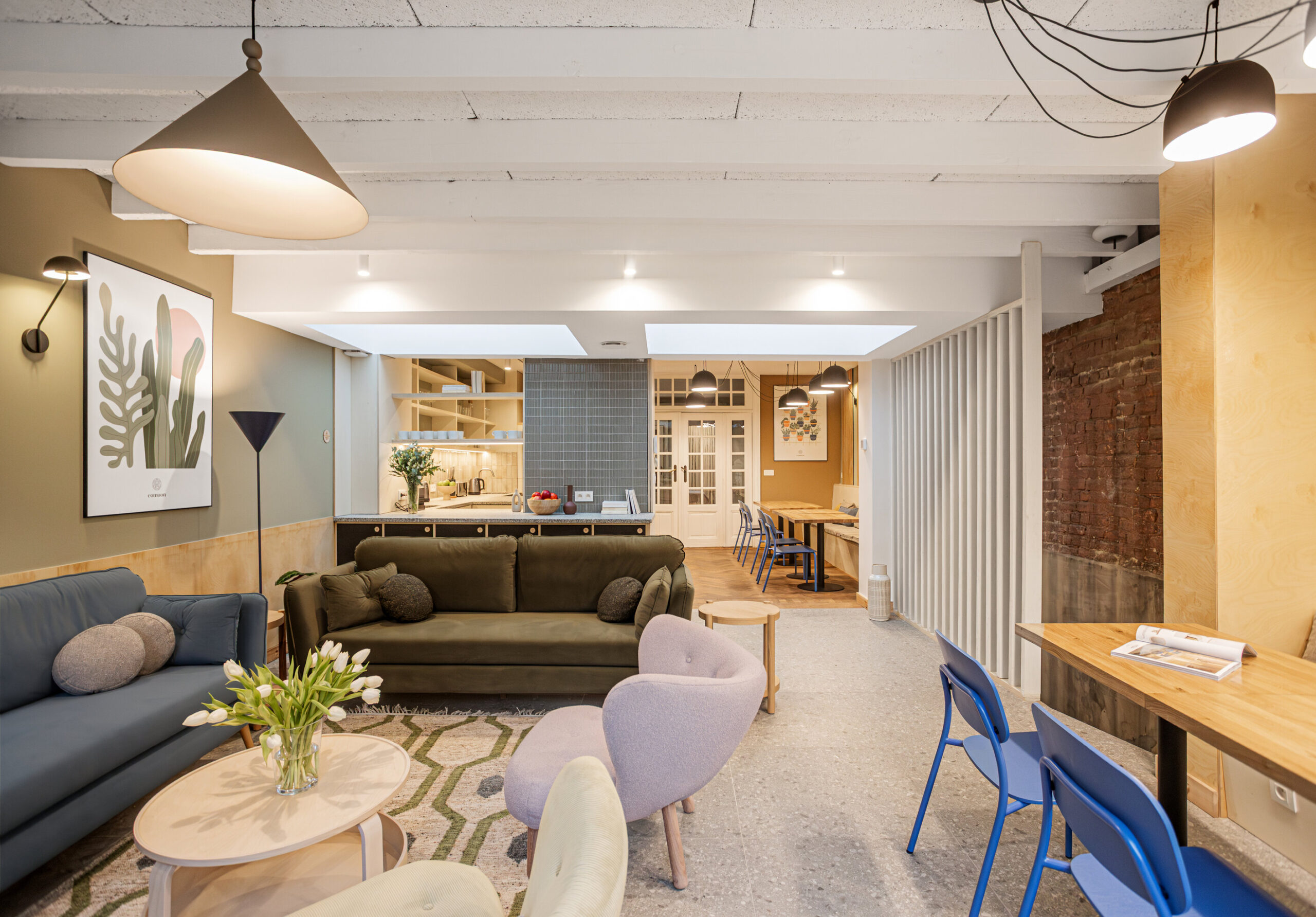
Urban coliving is a furnished, all-inclusive shared home in a city centre, aimed at young professionals who want convenience and a ready-made social circle. Rooms come furnished, one monthly rent covers bills and services, and shared kitchens and lounges bring residents together.
Established operators show the model at scale: The Collective in London, Habyt in Berlin, and Cohabs and Comoon in Brussels. In Brussels, urban coliving clusters around the European Quarter, where international workers value walking distance to the EU institutions. This city-centre living with all-inclusive rent is the form most people picture when they hear the word, and it anchors the market for coliving in Brussels.
What Is Corporate Coliving?
Corporate coliving is furnished shared housing booked by an employer to house staff on relocations, projects or team assignments. The company pays the rent, and the resident moves in without arranging furniture, bills or a long lease.
Typical stays run from 1 to 6 months, matching the length of a posting or a project. Corporate housing can cover a single relocated hire or a whole team sharing one house for a build phase, which makes it a flexible alternative to serviced apartments for employers managing headcount across cities.
What Is Rural Coliving?
Rural coliving places the shared-living model outside the city, in houses surrounded by nature and often built around sustainability. It attracts digital nomads who work remotely and value quiet, space and a slower pace over a central address.
Spaces such as Sende and Sun and Co., both in Spain, run this model in village settings. A rural coliving differs from a coliving retreat in one respect: the coliving is a permanent home you rent for months, while a retreat is a themed, time-limited stay. Both trade the city centre for countryside, but only one is a place to settle.
What Is Pop-Up Coliving?
Pop-up coliving is a temporary, themed community set up in a specific location for a short run. Stays typically last 10 to 20 days, after which the group disperses and the space returns to other use.
The theme is the point: pop-ups form around wellness, surf, ski or focused project work, gathering people who share an interest as much as an address. This temporary community suits nomads and creatives who want the social intensity of coliving without a multi-month commitment.
What Is Student-Oriented Coliving?
Student-oriented coliving is shared housing designed for students, adding the community programming and flexible contracts that a traditional dormitory lacks. Where purpose-built student accommodation (PBSA) sells the room, student coliving sells the room plus the social life around it.
The Social Hub, active across Europe, runs this hybrid of hotel, student housing and coliving. In Brussels, the classic student rental is the "kot" — a single room in a shared student house — which the broader guide to types of housing in Brussels sets alongside coliving, colocation and studios. Student coliving sits between the two, offering more service than a kot and more community than a studio.
What Is Senior Coliving?
Senior coliving is shared housing for older adults, pairing private apartments with communal spaces to keep residents socially connected as they age. It answers a specific risk: isolation in later life.
The design rationale is well documented. The World Health Organization reported in 2021 that social isolation and loneliness affect around 1 in 4 older people and carry health risks comparable to smoking, so ageing in community can support wellbeing as much as convenience. Senior coliving gives residents independence in their own home and company a few steps away.
What Is Hybrid Coliving?
Hybrid coliving blends the shared home with another service, and it takes two main forms. The first pairs coliving with coworking, so remote workers live and work in the same building. The second is a hotel-style or aparthotel coliving offering flexible stays with front-desk service, run by operators such as Zoku in Amsterdam and Outsite.
Both forms trade a fixed lease for flexibility, appealing to people who move often and want work and hospitality built in. The coworking variant in particular fits professionals near the EU institutions, as the guide to coliving in Brussels with coworking shows for remote workers who need a desk at home.
Which Type of Coliving Should You Choose?
The right type of coliving depends on how you work, how long you stay and what you can spend. Match your situation to the options below.
- If you work in a city — choose urban coliving for centrality and social life
- If you work remotely — choose rural or pop-up coliving for space and focus
- If you study — choose student-oriented coliving for flexible terms and community
- If your company relocates you — choose corporate coliving and let the employer handle it
Budget then narrows the shortlist, since the price ranges in the comparison table above span more than a thousand euros a month. Weighing the monthly figure is easier once you know local benchmarks, which the breakdown of coliving prices in Brussels provides for the urban segment most residents choose.
Is Urban Coliving the Most Common Type?
Yes, urban coliving is the most common type, because coliving supply concentrates in large European cities where demand for flexible housing is highest. Industry living-sector reports from firms such as JLL and Savills consistently place the great majority of operational beds in capital and major cities. The exact share can shift year to year, but the urban model dominates the market by a wide margin — which is why most available coliving rooms in Brussels fall into it.
Do All Types of Coliving Include Bills and Furniture?
Most coliving types include furnished rooms and bills, but inclusions vary by model. Pop-up and corporate coliving usually bundle the fullest package, since guests expect a turnkey stay, while rural coliving is sometimes simpler, with fewer services in exchange for a lower price. Always check the specific listing rather than assuming a model's defaults.