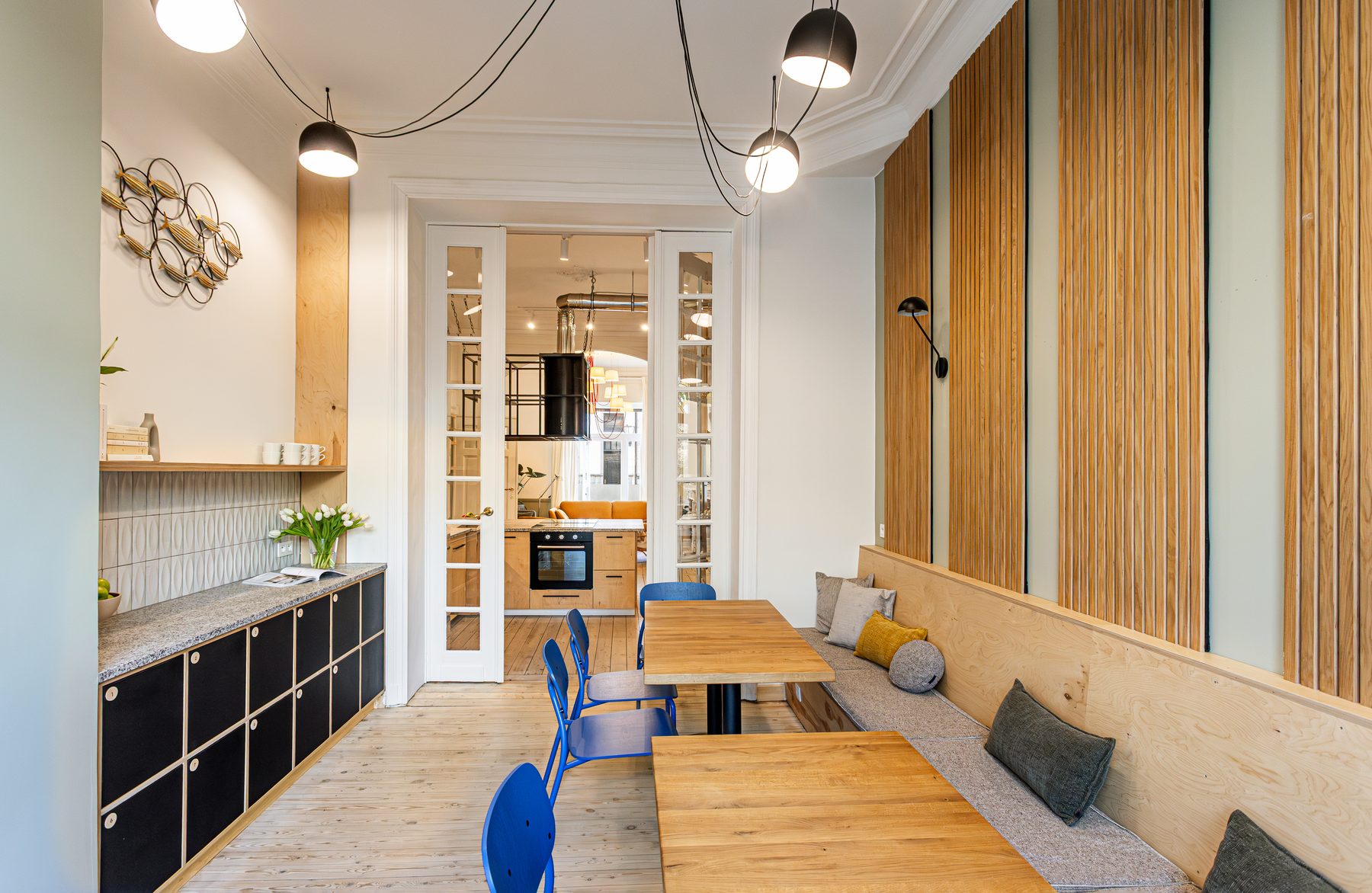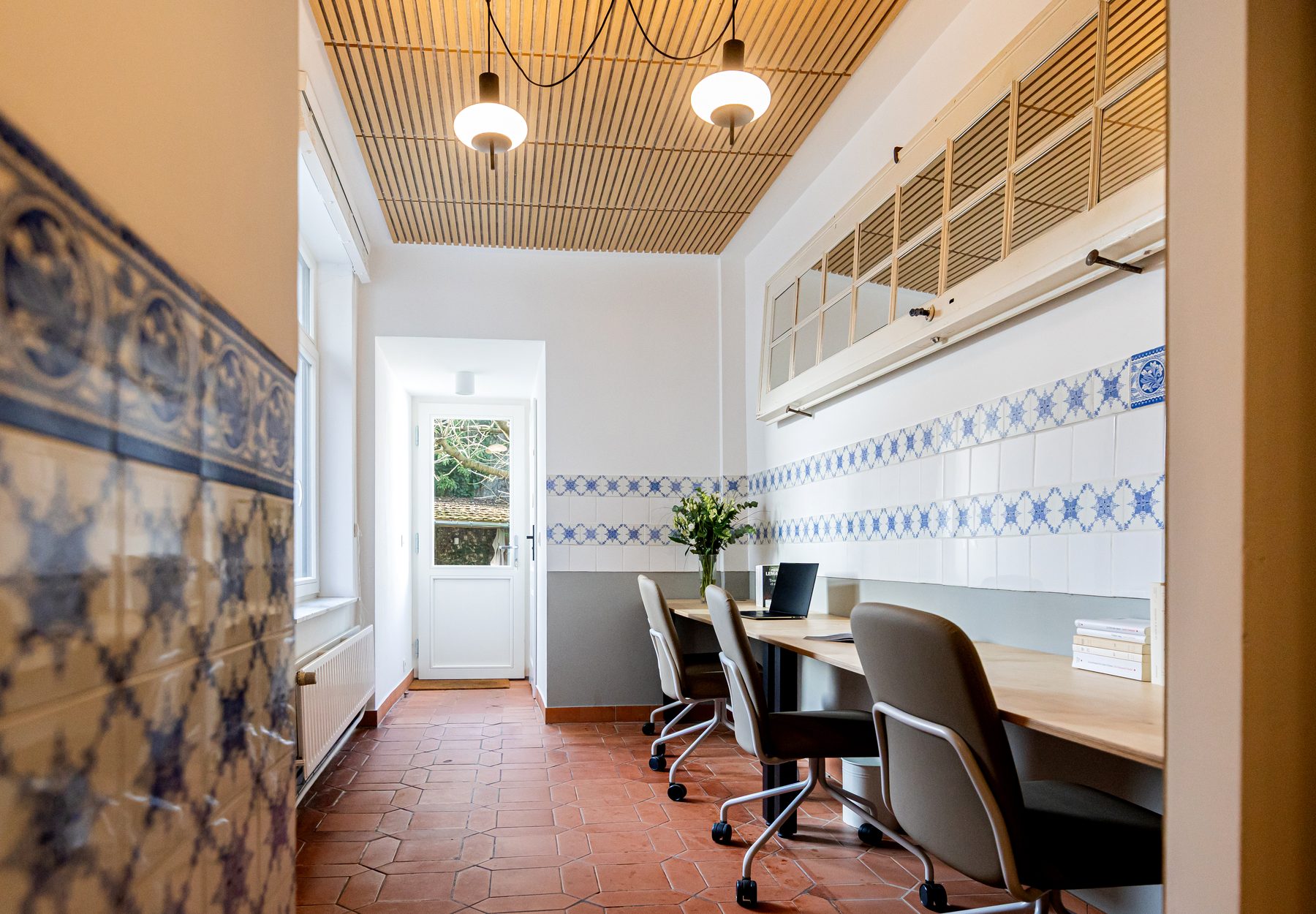
Coliving in Belgium means renting a furnished private room with all-inclusive rent and a built-in community, concentrated in the country's largest cities. It is aimed at people who value flexibility over a long lease — expats, young professionals and internationally mobile workers. This guide covers how the Belgian market works, which cities have coliving, what it costs, and how the rules change across the three regions.
What Is Coliving in Belgium?
Coliving in Belgium is a furnished, all-inclusive form of shared housing rented by the room, available mainly in Brussels, Antwerp and Ghent, with flexible contracts aimed at expats and young professionals. One monthly price covers the room, bills, internet and shared-space cleaning.
The market is still young but real: several dozen operators run a few thousand coliving rooms across the country, the great majority of them in Brussels. Supply is growing fastest where international demand is highest, which keeps the sector tightly clustered around a handful of cities.
How Does the Belgian Coliving Market Work?
The Belgian coliving market runs on room-by-room rental: operators lease or own buildings, furnish them, and rent each room individually on a flexible contract with services bundled in. The main coliving operators in Belgium are compared in the table below.
| Operator | Main cities | Approx. rooms | Price range (EUR/month) |
|---|---|---|---|
| Cohabs | Brussels | 300+ | €850–€950 |
| Ikoab | Brussels, Liège, Charleroi | 200+ | €700–€900 |
| Colive | Brussels | ~100 | €850-€950 |
| Comoon | Brussels — European Quarter | 4 houses | €850–€1,100 all-inclusive |
| Other local operators | Antwerp, Ghent, Leuven | varies | €650–€900 |
The business model is consistent across operators: rooms are rented individually rather than as a whole flat, contracts are flexible, and service is priced into the rent. That single-room, all-inclusive structure is what separates coliving from a standard flat rental — a structure the wider guide to coliving in Brussels explains for the city that anchors the market.
Which Belgian Cities Have Coliving Spaces?
Brussels holds by far the largest concentration of coliving spaces in Belgium. Supply clusters in the European Quarter and the neighbouring communes of Etterbeek, Ixelles, Saint-Gilles and Schaerbeek, where furnished, flexible rooms match the way international residents live.
Demand in the capital comes from a specific population: expats, EU trainees and staff of the international institutions, who arrive on short postings and want housing that is ready on day one. These residents rarely commit to a nine-year Belgian lease, and a furnished coliving room with a flexible contract removes the usual friction of moving countries — no deposit for furniture, no utility accounts to open, no landlord to find. That steady turnover is what makes Brussels the natural home of the Belgian coliving market and keeps operator supply concentrated inside the capital rather than spread across the country.
Beyond the capital, coliving thins out quickly. Antwerp is the second market, with a creative and business profile; Ghent and Leuven host smaller, more student-oriented supply; and Liège and Charleroi offer lower prices, served in part by operators such as Ikoab. Space counts in these cities remain a fraction of Brussels'.
How Much Does Coliving Cost in Belgium?
Coliving in Belgium costs between €400 and €1,100 per month all-inclusive in 2026. A typical room in Brussels sits around €700, while the premium segment — a private bathroom in the European Quarter — runs €900 to €1,100, with Comoon starting at €850.
Market averages vary by city and should be read as indicative rather than fixed. What the price covers is consistent: utilities, internet and cleaning of the common areas, in that order, plus furniture and shared amenities. The figures track closely with the detailed breakdown of coliving prices in Brussels, since the capital sets the benchmark for the country.
How Do Coliving Rules Differ Across Belgian Regions?
Coliving rules can differ across Belgium's three regions, because housing law is set regionally rather than nationally. The framework that applies depends on where the house stands, as summarised below.
| Region | Legal framework | Key point for colivers |
|---|---|---|
| Région de Bruxelles-Capitale | Bail de colocation and colocation pact in the Brussels Housing Code | Shared-lease rules formalised for colivers |
| Flanders | Vlaamse Codex Wonen | Quality standards for rented rooms |
| Wallonia | Walloon bail de colocation, 2018 decree | Regional shared-tenancy framework |
Because the rules are regional, a coliving contract in Brussels may follow different obligations than one in Ghent or Liège. Colivers should confirm which regional framework applies to their house, and the commune or gemeente can clarify local requirements where the law leaves room for interpretation.
What Contracts Are Used for Coliving in Belgium?
Coliving in Belgium uses three main contract types, in rough order of frequency: the bail de colocation (shared-tenancy lease), the bail de résidence principale (main-residence lease), and short-term or common-law agreements for stays of a few months. The right one depends on the region and the operator.
Each contract carries standard obligations: a garantie locative, or rental deposit, of typically two to three months' rent; an état des lieux documenting the room's condition at move-in; and enregistrement, the registration of the lease. These details matter enough to treat separately, and the guide to coliving contracts in Belgium works through deposits, notice periods and lease types in depth.
Who Lives in Coliving in Belgium?
Coliving residents in Belgium fall into four groups, in order of prevalence: young professionals, expats, EU trainees on the Blue Book traineeship, and digital nomads. All four share a need for furnished, flexible housing without a long commitment.
Brussels shapes this profile more than any other city. As the seat of the EU institutions and NATO, it draws a large international workforce — foreign nationals make up roughly a third of the capital's residents — and that population is the core coliving market. The city's internationalism is the demand engine behind Belgian coliving.
Why Is Brussels the Coliving Capital of Belgium?
Brussels is the coliving capital of Belgium because it combines the largest operator supply, the strongest international demand and the highest tenant turnover in the country. Each factor reinforces the others.
The EU institutions and the Schuman district generate a constant flow of internationally mobile workers, whose short and uncertain stays suit flexible, room-by-room contracts far better than a standard nine-year lease. That is why operators concentrate their houses here — including in the European Quarter around Schuman, where furnished coliving rooms in Brussels sit within walking distance of the institutions that drive the demand.
How Do You Choose Where to Colive in Belgium?
The right Belgian city for coliving depends on why you are moving there. Match your situation to the options below.
- If you work around the EU institutions — choose Brussels
- If you study — choose Ghent or Leuven
- If you want a lower budget — choose Liège or Charleroi
- If you work in creative industries — choose Antwerp
For most internationally mobile residents the choice defaults to Brussels, simply because that is where the supply, the community and the flexible contracts concentrate.
Is Coliving Legal in Belgium?
Yes, coliving is legal in Belgium and is regulated at the regional level. The requirements can differ between the Brussels-Capital Region, Flanders and Wallonia, since each sets its own housing rules, so the exact obligations depend on where your house is located rather than on a single national law.
Can You Register Your Address (Domiciliation) in a Belgian Coliving?
Yes, you can register your address in a coliving if the lease and the commune allow domiciliation at the property. The procedure runs through your local commune or gemeente and can vary between municipalities, so confirm in advance. The step-by-step process is set out in the guide to commune registration in Brussels.